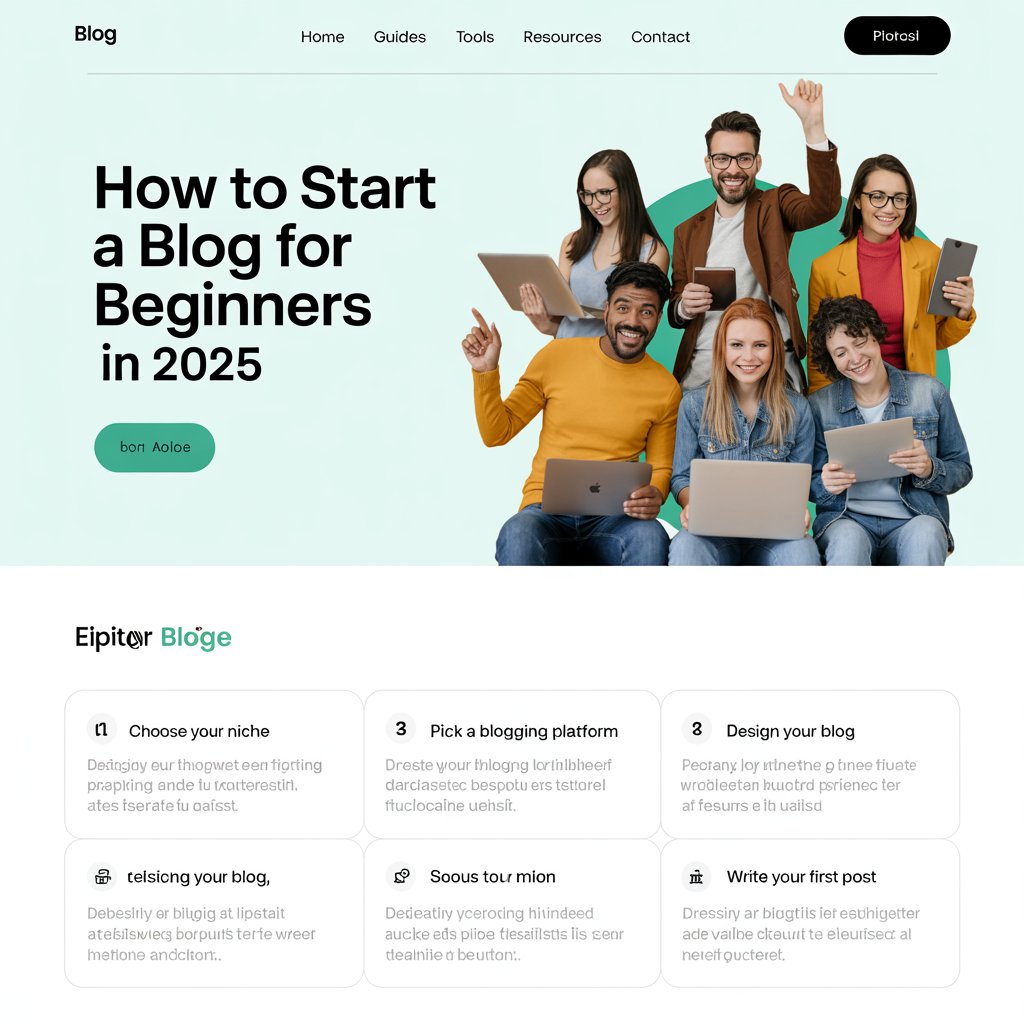
《How to Start a Blog for Beginners in 2025 – Step-by-Step Guide》
How to Start a Blog in 2025: Step-by-Step Beginner’s Guide
✍️
Have you been thinking about starting a blog but don’t know where to begin? You’re not alone. In 2025, blogging is more than just an online diary — it’s a powerful platform to build your brand, share your voice, and even generate income.
But here’s the truth: most people give up before publishing their first post, simply because they don’t know the right steps to take.
In this complete beginner-friendly guide, I’ll walk you through how to start a blog in 2025 — from choosing your niche to publishing your first post — even if you have zero tech experience.
Let’s get started!
🪜 Step 1: Choose Your Blog’s Focus and Audience
Before touching anything technical, you need clarity on what your blog is about and who it’s for.
Ask yourself:
What topics can I write about consistently?
What problems or stories do I want to share?
Who would enjoy or benefit from this content?
✅ Tip: Pick a specific niche. Instead of “lifestyle”, choose “minimalist living for busy moms” or “budget travel for women”. Specific = searchable.
Write down your blog mission in one sentence. Example: “I help aspiring writers start profitable blogs through simple, actionable steps.”
🛒 Step 2: Pick a Blog Platform (WordPress vs. Others)
For beginners, WordPress.org is the best long-term choice because:
You own your content (vs. Medium or Wix)
It’s flexible for monetization
There are thousands of themes/plugins
🟢 Recommended:
Platform: WordPress.org
Hosting: SiteGround / Hostinger / Bluehost
Domain: Namecheap or register through your host
You’ll need:
A domain name (~RM50–RM70/year)
Hosting (~RM200–RM300/year)
✅ Tip: Choose a short, memorable domain ending with .com if possible.
⚙️ Step 3: Set Up WordPress (No Tech Needed)
After buying your domain and hosting, your provider usually offers 1-click WordPress install.
Essential settings once WordPress is live:
Install a lightweight theme (e.g., Astra, Kadence)
Delete sample content (Hello World post)
Change permalink structure to “Post name”
Install must-have plugins:
RankMath or Yoast SEO
Akismet (anti-spam)
WPForms Lite (contact form)
Don’t get overwhelmed — you only need the basics to begin.
✍️ Step 4: Write Your First Blog Post
You don’t need to be a great writer — you just need to be helpful.
Start with something simple:
“Why I started this blog”
“My goals for this blog”
“3 things I wish I knew before…”
Structure:
Strong title with keyword
Short intro
Body broken into sections (H2, H3)
Conclusion + CTA (ask reader to comment or share)
✅ Tip: Write like you’re talking to one person. Be friendly, not formal.
🧩 Step 5: Create Essential Pages
You only need 3 pages to start:
About Me: Share who you are and why this blog exists.
Contact: Simple contact form (use WPForms).
Privacy Policy: Use free generators.
These build trust — readers want to know there’s a real person behind the site.
🔍 Step 6: Set Up Google Analytics + Search Console
To track your blog growth, install:
Google Analytics (GA4) – View traffic, user behavior
Google Search Console – See what keywords you rank for
Use plugins like Site Kit by Google to integrate both in minutes.
✅ Tip: Check Search Console every 2 weeks to see which blog posts are showing up on Google — it helps you improve titles and target better keywords.
💰 Step 7: Plan for Monetization (Optional but Smart)
Even if you don’t plan to earn right away, it helps to lay the groundwork:
3 beginner-friendly ways to monetize:
Affiliate marketing (recommending tools)
Ads (Google AdSense)
Digital products (PDF guides, Notion templates)
Later you can explore email marketing, online courses, or coaching.
✅ Bonus: Mistakes to Avoid
❌ Writing only personal stories (no one is searching for them)
❌ Using a slow, bloated theme
❌ Skipping keyword research
❌ Not promoting your content after publishing
🎯 Final Thoughts
Starting a blog can feel scary — but it doesn’t have to be.
If you follow these 7 steps, you’ll have your blog live, optimized, and ready to grow in just a few days. The key is consistency and being willing to learn.