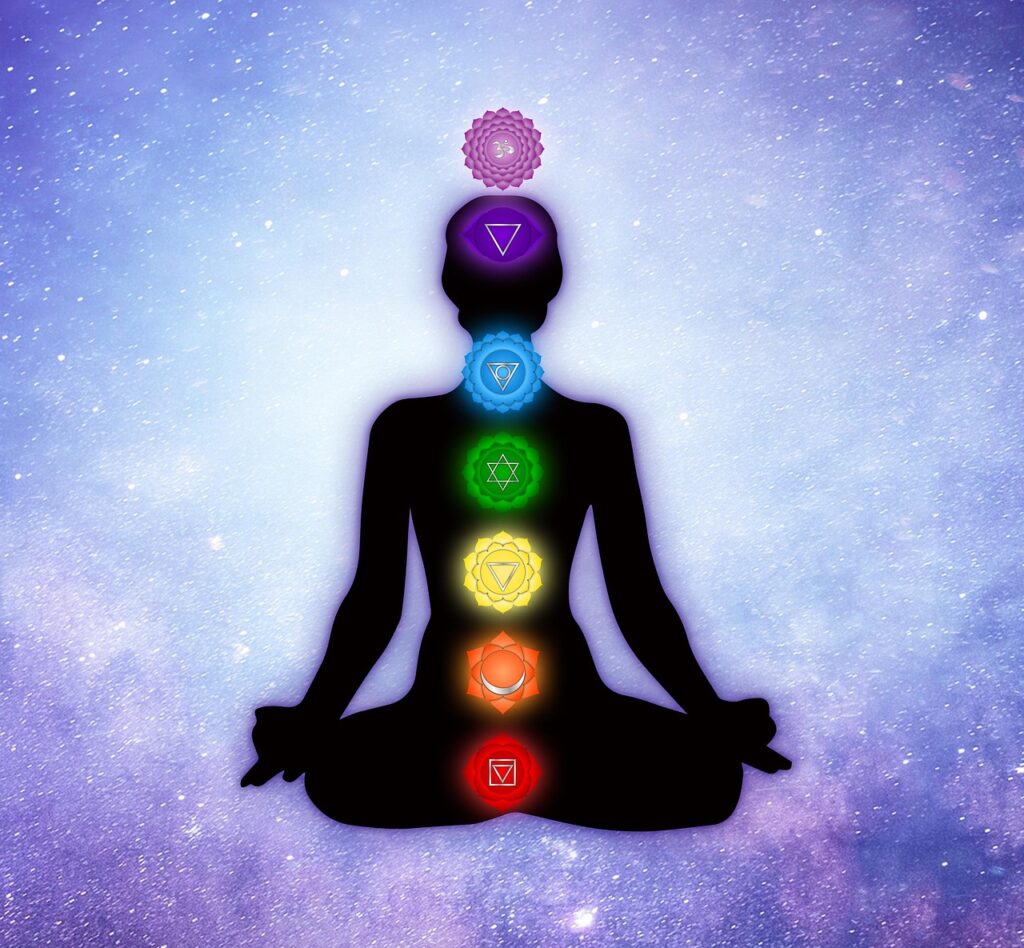

Yoga Asanas: A Timeless Dialogue Between Body and Soul
Yoga Asanas: A Timeless Dialogue Between Body and Soul
I. Origins of Asana: From Ancient Wisdom to Modern Science
On seals unearthed from the Indus Valley Civilization dating back to 3000 BCE, archaeologists discovered figures seated in meditative postures—among the earliest known records of yoga asanas. In the Yoga Sutras, Patanjali defines Asana as a “steady and comfortable posture,” a seemingly simple definition underpinned by the profound understanding of the human body held by the ancient sages of India.
Modern exercise science offers new insight into this ancient wisdom. For example, when holding Warrior II Pose, practitioners engage the quadriceps and gluteal muscles, while the lateral extension of the arms activates the latissimus dorsi. This multi-muscle coordination enhances proprioception. Research from Harvard Medical School has shown that consistent yoga practice can reduce the size of the amygdala—the brain region associated with emotional regulation—scientific proof of the yogic idea that “training the body calms the mind.”
II. Asana Anatomy: The Poetic Expression of Biomechanics
Take the classic Triangle Pose as an example:
- The front hip externally rotates about 15 degrees
- The back foot turns out approximately 60 degrees
- The spine bends laterally at an average of 2 degrees per segment on the sagittal plane
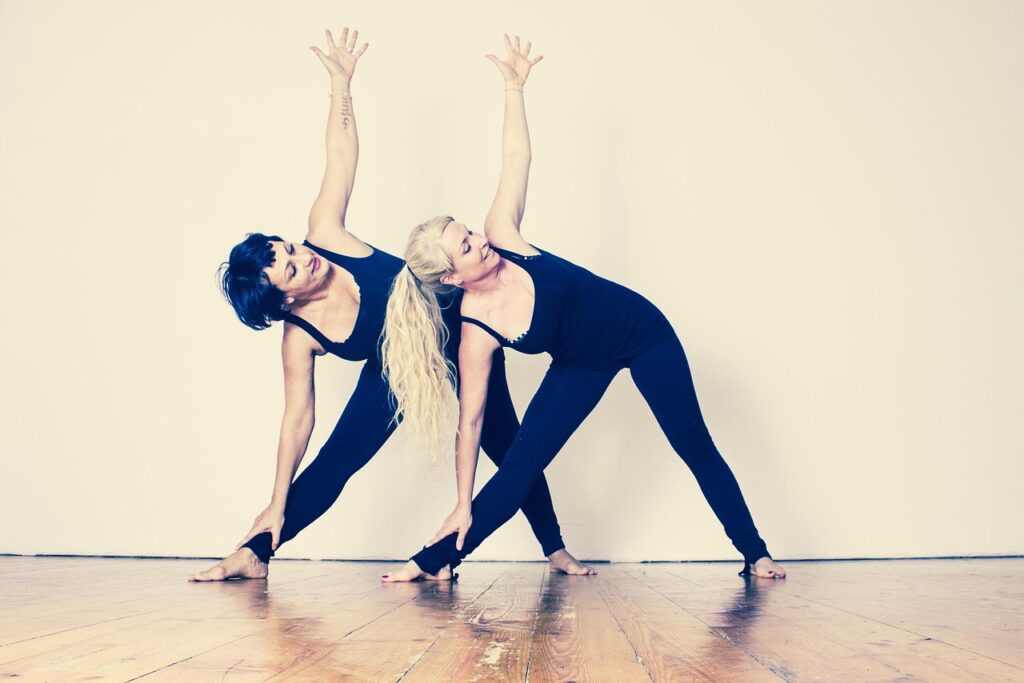
This precise distribution of force creates balanced tension across the muscle chains. Master Iyengar once described this state as, “In an asana, every muscle should bloom like a flower.” When one finds the coordinated contraction between the iliopsoas and erector spinae, the practitioner experiences the yogic wisdom of achieving maximum stretch with minimal effort.
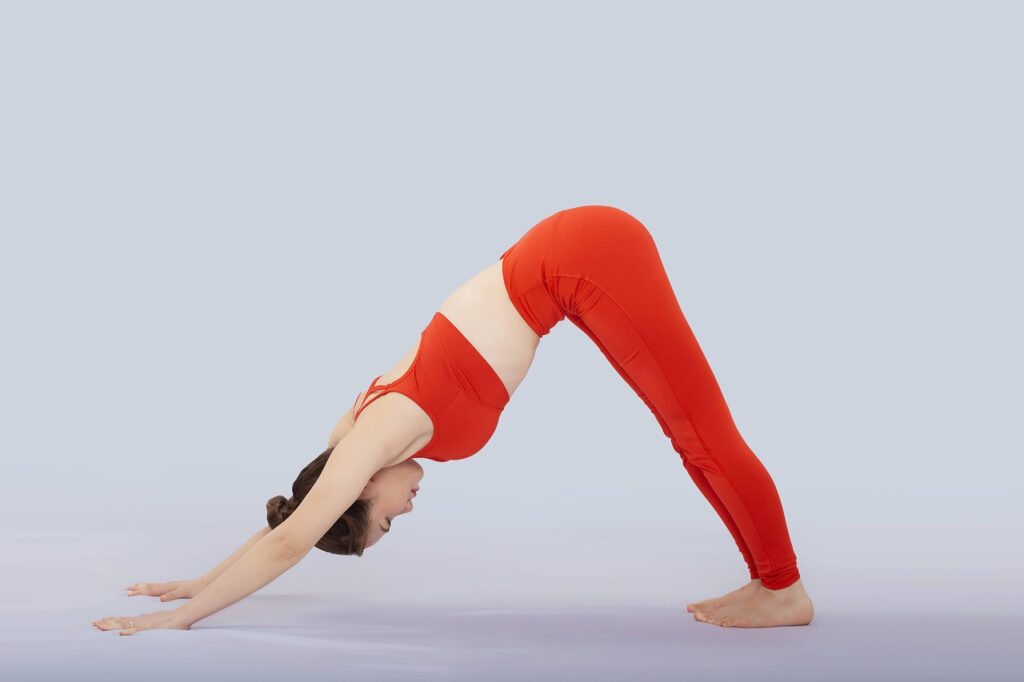
Breath, as the soul of the asana, follows strict biomechanical principles: In Downward-Facing Dog, each centimeter of diaphragmatic descent increases intra-abdominal pressure by approximately 2 mmHg. This change not only massages internal organs but also hydraulically supports the spine. Recent studies show that yogic breathing techniques such as Ujjayi can improve blood oxygen saturation by 3–5%, explaining why experienced practitioners can maintain deep calm during demanding postures.
III. Cultural Evolution: Three Key Phases in Asana History
- Tantric Period (6th–13th Century)
The Yoga Upanishads describe 112 asanas, 70% of which are seated, supporting energy cultivation. For instance, Lotus Pose applies pressure to the perineum through the heels, believed to awaken the Kundalini energy. - Modern Transition (1920–1950)
Krishnamacharya, teaching in the Mysore Palace, pioneered “yoga therapy” and integrated martial movements into yoga sequences. He developed the flowing vinyasa system and modified postures such as Standing Forward Bend to accommodate tight hamstrings in modern bodies. - Global Fusion (21st Century)
In Los Angeles, yoga studios combine hip-hop music with flow sequences, while Tokyo promotes “office yoga” focused on precision. Yet these innovations prompt reflection: When Firefly Pose earns a million likes on Instagram, have we forgotten that the essence of asana is inner awareness?
IV. Asana Practice: Building Your Daily Ritual
Recommended daily sequence:
- Mountain Pose (5 minutes): Press evenly through three points of each foot; visualize your spine growing like a Bodhi tree
- Cat-Cow Pose (3 cycles): Follow the rhythm of your breath; nourish your spinal discs with 0.5mm of fluid exchange
- Downward-Facing Dog (2 minutes): Maintain a golden ratio between sit bones and fingertips
- Corpse Pose (7 minutes): Assume NASA’s “zero-gravity” posture; activate the parasympathetic nervous system
V. Beyond the Asana: When the Body Becomes a Temple
At the Yoga Institute in Mumbai, researchers used infrared thermography and found that during Peacock Pose, the body temperature around the third chakra rises by 0.8°C—a possible validation of The Light on Hatha Yoga, which prophesied: “When an asana is perfected, the body emits inner light.”
The Museum of Modern Art in New York has included Tree Pose in its performance art collection. A curator commented, “This is humanity’s eternal attempt to defy gravity.” And for each practitioner, the asana becomes a portable sacred space—whether you’re using Eagle Pose to ease stiffness at the airport, or Vajrasana to stay alert in a meeting, you are living the 5,000-year-old wisdom of yoga in the present moment.